
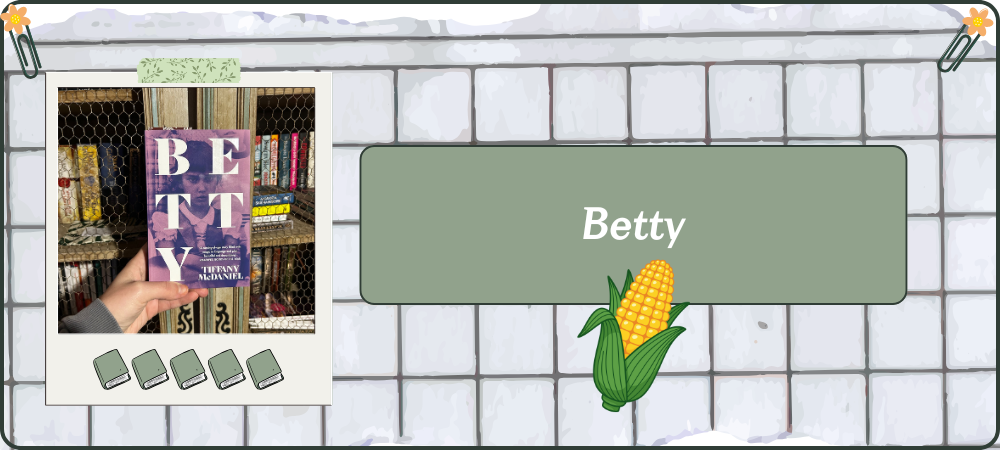
de Tiffany McDaniel.
Synopsis –
Born in a bathtub in 1954 to a white mother and a Cherokee father, Betty inhabits a world of poverty and loss, of lush landscapes and blazing stars.
Despite the hardships she encounters, Betty is resilient. Her curiosity about the natural world, her fierce love for her sisters and her father’s brilliant stories are kindling for the fire of her own imagination, and in the face of all to which she bears witness – the horrors of her family’s past and present – Betty discovers an escape: she begins to write.
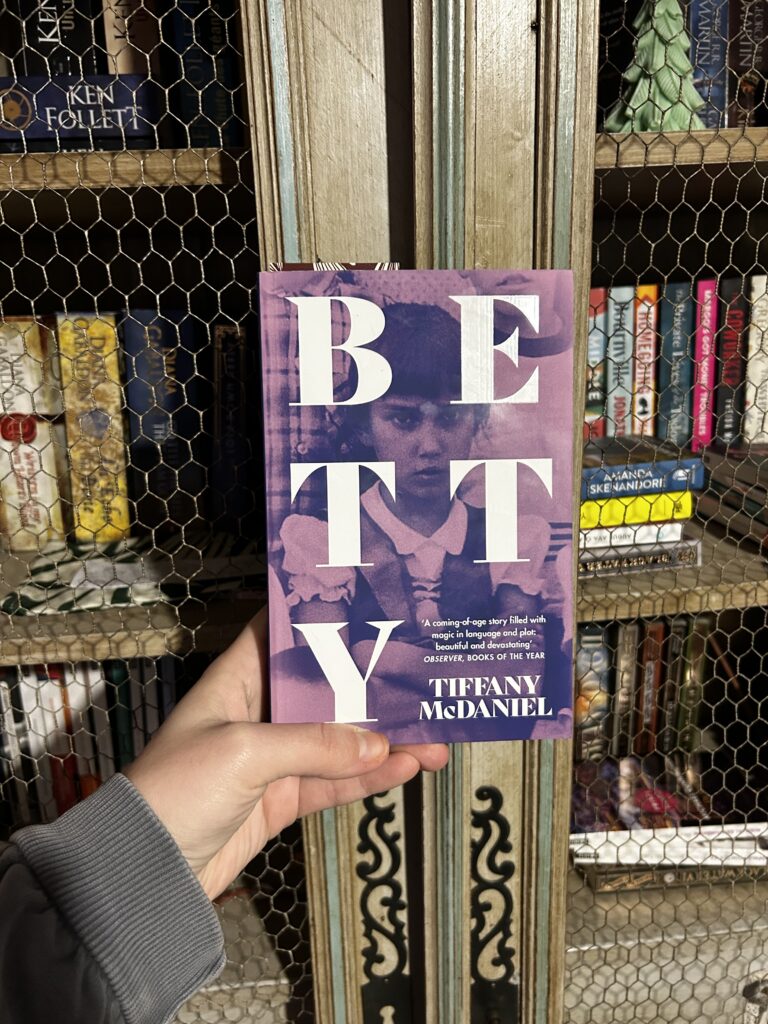
Mon avis / What I think –
Beware! This book is all about grief, pain, sadness, and tough things for a kid to live.
Betty is a clever young girl who loves her father dearly. She’s half Cherokee, half American; well, all things considered, she is fully American.
Her father is a storyteller; Landon Carpenter loves his kids no matter what. He tells them stories about his ancestors, the sky, the earth, the stars, and plants. Listening and reading about his stories was like sitting around the fire listening to a Cherokee talking about the legends of his people.
Betty has a mother too. But she is not a caring mother. Not at all. She was destroyed long ago by her own father, and having kids and losing them destroyed her even more. Even though she didn’t show love to any of them, or on her own terms.
I’ll be honest. I think I hated her throughout the novel. She told horrible stories to Betty, and it started also to, you know, change her. She was destroyed, and she destroyed things around her (the Birdie and kittens scene was horrible). But in the end, how could she not? She was utterly mistreated by both of her parents. Her mother did not protect her; how could she protect her own kids? How could she be a good mother?
The other big thing about this book is the brother/sister relationships. Some of them are nice and touching, and some of them are horrible, disturbing… Fraya tried to survive, but the demon was always around. I understand why Betty didn’t say a thing, but all along I wanted her to tell her father so I would finally know how he would have handled the problem.
I won’t say the opposite, but this book was horrible to read, not because of the writing but because of the story. A lot of subjects are tackled in there: racism, how parents can influence their kids in their thinking (in the good or bad way, by the way), rape, incest, womanhood, and being a woman. Well, all those things sometimes make stories hard to tell.
I cried a lot, especially toward the end. I hope Betty had a good life to make up for the deaths she endured. I hope Flossie, Trustin, and Fraya stayed on her path and that they would send each other goodnight notes in the afterlife when they are reunited.
Attention ! Ce livre parle de deuil, de douleur, de tristesse et de choses difficiles à vivre pour un enfant.
Betty est une jeune fille intelligente qui aime son père de tout son cœur. Elle est à moitié Cherokee, à moitié Américaine ; enfin, tout bien considéré, elle est entièrement Américaine.
Son père est un conteur; Landon Carpenter aime ses enfants quoi qu’il arrive. Il leur raconte des histoires sur ses ancêtres, le ciel, la terre, les étoiles et les plantes. Écouter et lire ses histoires, c’était comme s’asseoir autour du feu et écouter un Cherokee parler des légendes de son peuple.
Betty a aussi une mère. Mais elle n’est pas une mère attentionnée. Pas du tout. Elle a été détruite il y a longtemps par son propre père, et avoir des enfants et les perdre l’a encore plus détruite. Même si elle n’a montré de l’amour à aucun d’eux, ou selon ses propres termes.
Je vais être honnête. Je crois que je l’ai détestée tout au long du roman. Elle racontait des histoires horribles à Betty, et cela a commencé aussi à, vous savez, la changer. Elle était détruite, et elle détruisait les choses autour d’elle (la scène avec Birdie et les chatons était horrible). Mais à la fin, comment aurait-elle pu ne pas l’être ? Elle a été complètement maltraitée par ses deux parents. Sa mère ne l’a pas protégée; comment pourrait-elle protéger ses propres enfants? Comment pouvait-elle être une bonne mère ?
L’autre grande chose dans ce livre, c’est la relation entre les frères et sœurs. Certaines sont belles et touchantes, d’autres sont horribles, dérangeantes… Fraya essayait de survivre, mais le démon était toujours là. Je comprends pourquoi Betty n’a rien dit, mais tout le temps je voulais qu’elle le dise à son père pour que je sache enfin comment il aurait géré le problème.
Je ne dirai pas le contraire, mais ce livre était horrible à lire, non pas à cause de l’écriture mais à cause de l’histoire. Beaucoup de sujets sont abordés: le racisme, l’influence des parents sur la pensée de leurs enfants (en bien ou en mal d’ailleurs), le viol, l’inceste, la féminité, le fait d’être une femme. Eh bien, toutes ces choses rendent parfois les histoires difficiles à raconter.
J’ai beaucoup pleuré, surtout vers la fin. J’espère que Betty a eu une bonne vie pour compenser les décès qu’elle a endurés. J’espère que Flossie, Trustin et Fraya sont restés sur son chemin et qu’ils s’enverront des notes de bonne nuit dans l’au-delà quand ils seront réunis.
Il me tente beaucoup
Moi je dis qu’il faut que tu investisses du coup… No choice…